What is refractory
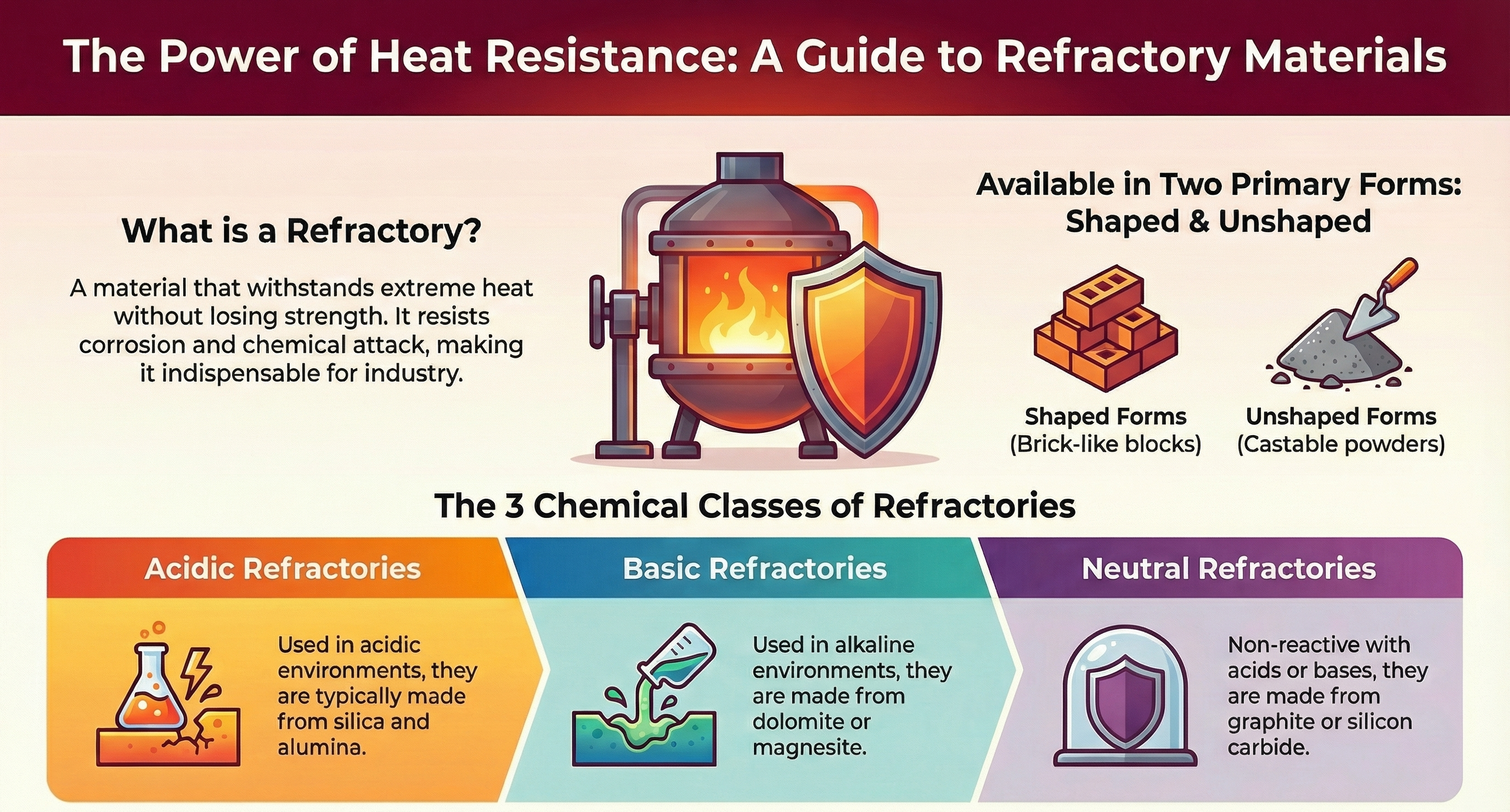
Refractory is a special material that can withstand extremely high temperatures. It does not melt, deform or lose its structural strength even under intense heat. The heat resistance of this material is very high, it has anti-corrosion properties and is completely stable against chemical reactions. It has become indispensable in the industry as its quality is maintained even under difficult conditions such as heat, abrasion or chemical attack. Many industries also rely on firebricks in Kolkata because they offer consistent performance under high heat.
Refractory Usage
Refractory is widely used in industry mainly as a thermal insulation material. It is placed as the first layer inside the high temperature furnace, boiler or furnace, so that the heat inside does not reach the metal part directly. The water wall of the boiler of the power plant is usually made of carbon steel, which can weaken at a temperature of 1000 to 1400 degrees Celsius. Refractory layer is used up to a certain height to protect the steel tubes up to the place of combustion. In the induction furnace of the SMS plant, steel is melted at a temperature of about 2200 ° C, where the refractory protects the structure of the furnace from corrosion. Even the crucible used in the DM plant is made of the same material, so that it does not deform due to heat or chemical effects.
Shape and size of the refractory
Refractory material is generally available in two forms. The first is the shaped form, which is made in the form of brick-like blocks and arranged inside the furnace or furnace of the boiler. The second is the unshapen or monolithic form, which is in powder or weldable state. Castable is one of the monolithic refractories, which is applied in the same way as plaster and its thickness is determined according to the need. It is especially effective in heat resistance, chemical stability and corrosion resistance. The work of refractory motor is to join the bricks firmly. Ordinary cement breaks down at high heat, so the refractory motor is made of the same material and makes the structure gas tight and stiff.
Classification of refractories
Refractories are divided into three classes on the basis of chemical nature. Acidic refractory is used in acidic slag or flue gases and does not react with acids, although it can react with basic gases or slag. The main components are silica and alumina. Silica is slightly acidic in nature and increases the mechanical strength and thermal conductivity of alumina material. When the percentage of silica and alumina changes, the characteristics of the brick also change, such as low duty, medium duty, high duty or super duty.
Features of the basic refractory
Basic refractory is made for use in alkaline environment. Dolomite or magnesite is converted to calcium oxide and magnesium oxide respectively by heating at high temperature, which are refractory elements of basic nature. They are made into bricks by grinding them into a binder and then hardened on high heat. Basic refractory is indispensable in special types of furnaces due to its ability not to react with alkaline slag or gas.
Application of Neutral Refractory
Neutral refractory materials do not react with acidic or basic slag. It is made from a mixture of acidic and basic ingredients and is equally effective in both types of environments in industry. Refractories based on silicon carbide, graphite or zirconia fall into this category. Silicon carbide is made by mixing silica with coke and heating it on high heat. Due to the crystal structure formed, it is low porosity and very durable. After that, it is mixed with a mixer and heated again. The use of neutral refractories is widespread in many industries today due to their survival in harsh environments and chemical stability.